Thailand's H1 2026 Investment Surge: What the Data Centre Boom Means for Commercial Real Estate
What Thailand's H1 2026 investment applications mean for data centre sites, EEC land, utilities, due diligence, and commercial real estate.
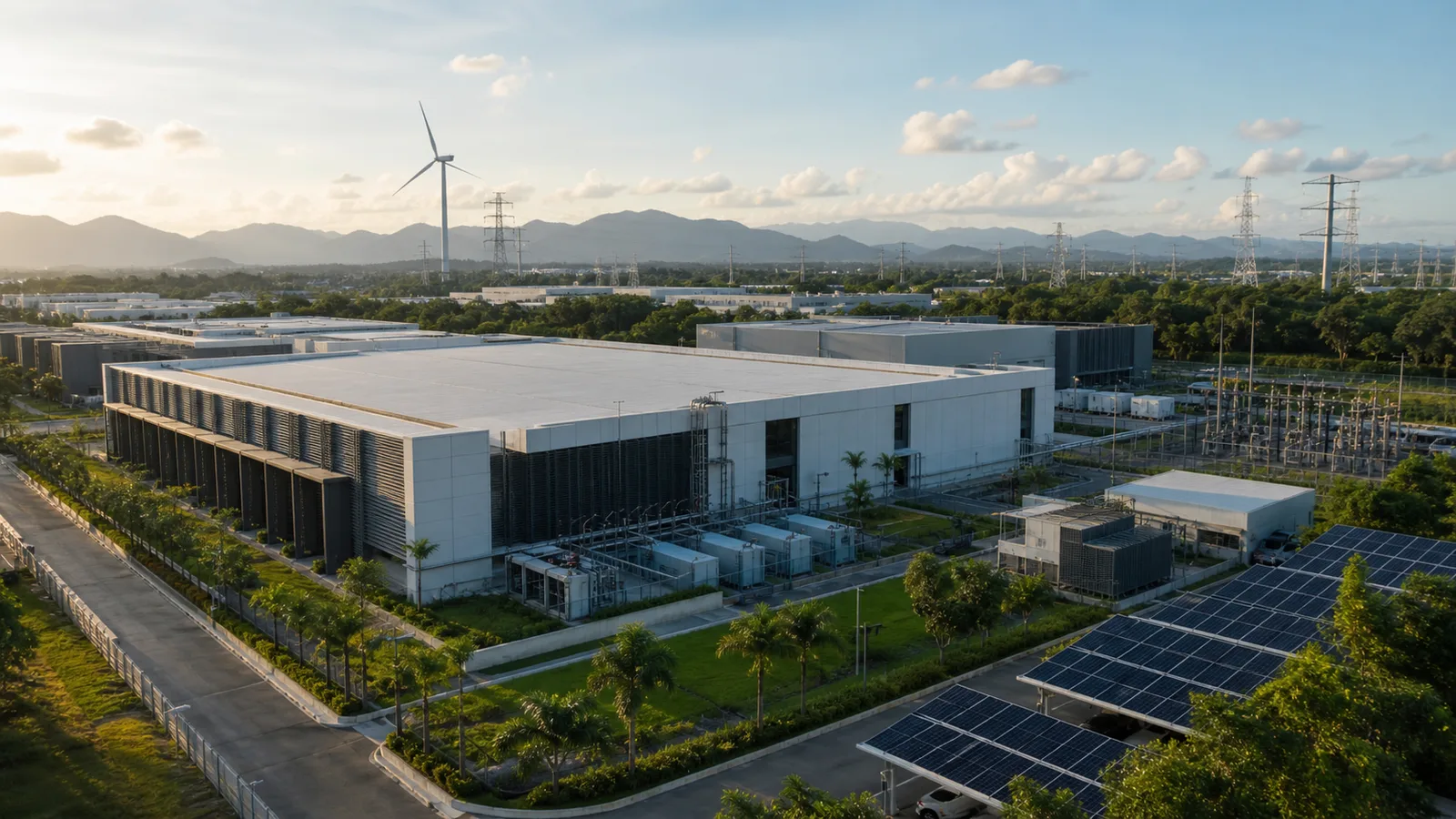
Thailand's Board of Investment reported that investment-promotion applications reached approximately THB 1.47 trillion across 1,299 projects in the first half of 2026. The digital sector accounted for about THB 1.12 trillion, driven largely by data centre and cloud-service projects. For commercial real estate, this is a strong indicator of demand for infrastructure-ready sites, but it is not proof that every proposed project will be built or that nearby land values will rise.
BOI figures describe applications entering an investment-promotion process. They should not be treated as completed capital expenditure, occupied floor area, or guaranteed absorption. A useful real estate analysis must move from the national headline to the constraints of each site: available power, grid connection timing, carrier diversity, water and cooling, planning status, environmental approvals, title, access, flood exposure, and delivery risk.
Why data centres change the site-selection equation
A conventional industrial or logistics buyer may begin with road access, labour, land price, and proximity to customers. A data centre operator starts with a more restrictive infrastructure screen. A large site has limited value if sufficient electrical capacity cannot be contracted on a workable schedule or if the connection design lacks resilience.
The Electricity Generating Authority of Thailand has identified power quality, sufficiency, and sustainability as core factors for the sector. Its 2026 reporting also points to transmission upgrades and new capacity in eastern pilot areas. Water availability, cooling design, fibre routes, network latency, and access to renewable electricity can narrow the viable location set further.
This changes how landowners and developers should present a site. A brochure that gives only plot size, frontage, and asking price is inadequate. Serious buyers need evidence: utility discussions, substation proximity, expected connection lead time, carrier routes, planning permissions, geotechnical conditions, flood history, water strategy, and a credible route to construction.
What the surge may mean for different property stakeholders
| Stakeholder | Potential implication | Immediate work |
|---|---|---|
| Landowner | A well-located site may attract a new class of infrastructure buyer | Verify title, zoning, access, grid context, flood risk, and assembly constraints before marketing |
| Industrial-estate operator | Demand may expand for serviced plots and supporting technical uses | Map power allocation, fibre diversity, water capacity, permitting, and expansion phasing |
| Developer | Opportunities may arise in powered shells, build-to-suit projects, and support facilities | Test operator demand, delivery capability, capital structure, and exit assumptions |
| Investor | The theme may create exposure through land, operating assets, utilities, or adjacent services | Separate contracted cash flow from speculative land appreciation and stress-test timing |
| Occupier or operator | Competition for suitable sites and power could tighten in preferred clusters | Run a multi-site process with infrastructure evidence and clear schedule gates |
The strongest opportunities are likely to be highly specific. Two adjoining plots can have different development outcomes because of access rights, zoning, drainage, transmission constraints, or the time needed to secure a connection. Market narratives cannot replace parcel-level work.
EEC and central-region implications
The Eastern Economic Corridor is a natural focus because it combines industrial infrastructure, international connectivity, existing estates, and planned grid investment. Chonburi, Rayong, and Chachoengsao can also support suppliers and related technical services. Yet an EEC address alone does not make a site suitable. Distance to the relevant substation, available capacity, route redundancy, flood management, title quality, and the intended approval pathway remain decisive.
Bangkok and the wider central region may suit projects that value proximity to major enterprise users, network interconnection, and a large technical workforce. Land cost, urban planning, construction logistics, community impact, and grid constraints may be more demanding. Operators often compare clusters rather than choosing a region from a headline. The analysis should include both the target site and at least one credible alternative.
A due-diligence framework for data centre land
1. Power and energy
Confirm the load requirement, available capacity, connection voltage, redundancy design, substation and line works, expected energisation date, tariff assumptions, and responsibility for upgrades. Sustainability claims should be tied to a defined procurement route rather than a general promise of renewable energy.
2. Connectivity and operational resilience
Map independent fibre paths, carriers, latency to relevant exchange points, route separation, and physical security. Review how the site handles a cable cut, grid interruption, equipment delivery, and emergency access.
3. Land, planning, and environment
Review title, boundaries, access, easements, zoning, building controls, environmental requirements, water supply, discharge, flood levels, geotechnical conditions, noise, and neighbouring uses. Large electrical and cooling equipment can create constraints that are not visible during a basic land inspection.
4. Delivery and commercial structure
Build a programme from acquisition to energisation, not only to completion of the building shell. Allocate risk for grid works, permits, enabling infrastructure, cost escalation, commissioning, delays, and phased expansion. Test the proposal under slower approvals and lower utilisation.
How to interpret the BOI figures responsibly
The H1 2026 data establishes that Thailand is receiving substantial proposed digital investment. It supports a case for deeper site and infrastructure research. It does not establish a universal price premium, a guaranteed tenant, or a completion date.
Investors should track what happens after the application: approval conditions, land control, permits, utility agreements, financing, construction awards, energisation, and commissioning. Each step reduces uncertainty. Until those milestones are visible, any valuation should distinguish verified commitments from assumptions.
How Nestenn can help
Nestenn Thailand's Research and Consultancy and Investment Advisory teams can help define site criteria, compare locations, screen commercial opportunities, coordinate property due diligence, and structure a decision record for stakeholders. Explore commercial property in Thailand, the EEC and Chonburi market hub, and related analysis on Thailand real estate investment in 2026 and land acquisition for development.
If you control land, plan a development, or need a site search, contact Nestenn Thailand. Include the target location, land area, intended use, power requirement if known, budget, and decision timing so the first review can focus on viable options.
Frequently asked questions
Does THB 1.47 trillion mean that amount has already been invested?
No. The BOI figure refers to investment-promotion applications reported for the first half of 2026. Applications can progress through approvals, land acquisition, financing, permits, construction, and commissioning at different speeds. Completed investment should be assessed through later project milestones.
Why is power availability so important for a data centre site?
Data centres require large, reliable electrical loads and carefully designed redundancy. Capacity, connection timing, grid works, power quality, tariffs, and the energy procurement route can determine whether a site is viable and when it can operate.
Is land in the EEC automatically suitable for a data centre?
No. The EEC has relevant infrastructure and industrial clusters, but each plot still requires checks for power, fibre, water, access, title, zoning, flood risk, environmental requirements, and delivery timing.
Will the data centre boom increase all nearby land prices?
There is no reliable basis for that conclusion. Data centre demand is selective, and value depends on confirmed infrastructure, legal suitability, access, development cost, competing supply, and actual transactions. Application figures alone do not support a valuation forecast.
What should a landowner prepare before approaching operators?
Prepare verified title and survey information, access details, planning status, utility evidence, flood and geotechnical information, site dimensions, neighbouring uses, and realistic commercial terms. Unverified claims about power or permits can disqualify a site early.
Sources
- Thailand Secures $43.6bn 1H 2026 Investment Surge as Big Tech Accelerates Southeast Asia AI Infrastructure Push., Thailand Board of Investment, July 23, 2026
- EGAT Ramps Up Efforts to Support Thailand's Data Center Boom., Electricity Generating Authority of Thailand, June 16, 2026
- Official report on transmission development for rising data centre demand in the EEC, Electricity Generating Authority of Thailand, February 16, 2026
- Thailand Approves 29 Billion Investment Wave as Data Center., Thailand Board of Investment, One Start One Stop Investment Center, May 2026
- Article on Thailand's data centre ecosystem, infrastructure, energy, connectivity, and economic spillovers, Bank of Thailand, January 2026
- Official release on data centre investment and sector development, Thailand Board of Investment, 2026
Loading content...