Commercial Property Due Diligence in Thailand: What to Check Before Signing
Buying or leasing commercial property in Thailand? Check title, access, permitted use, building readiness and real costs before signing.
Before committing to an existing commercial property in Thailand, establish three things: what legal right you will receive, whether your exact business can operate at the site, and what it will cost to get the premises ready. Ask for evidence while you still have the option to walk away. A building that is available to lease is not necessarily ready for your use.
This checklist is for operators considering an office, shop, showroom or warehouse, and for investors buying a building with tenants. It starts where an attractive listing or viewing leaves off. For a specialised power-intensive project, see our separate guide to data-centre site selection.
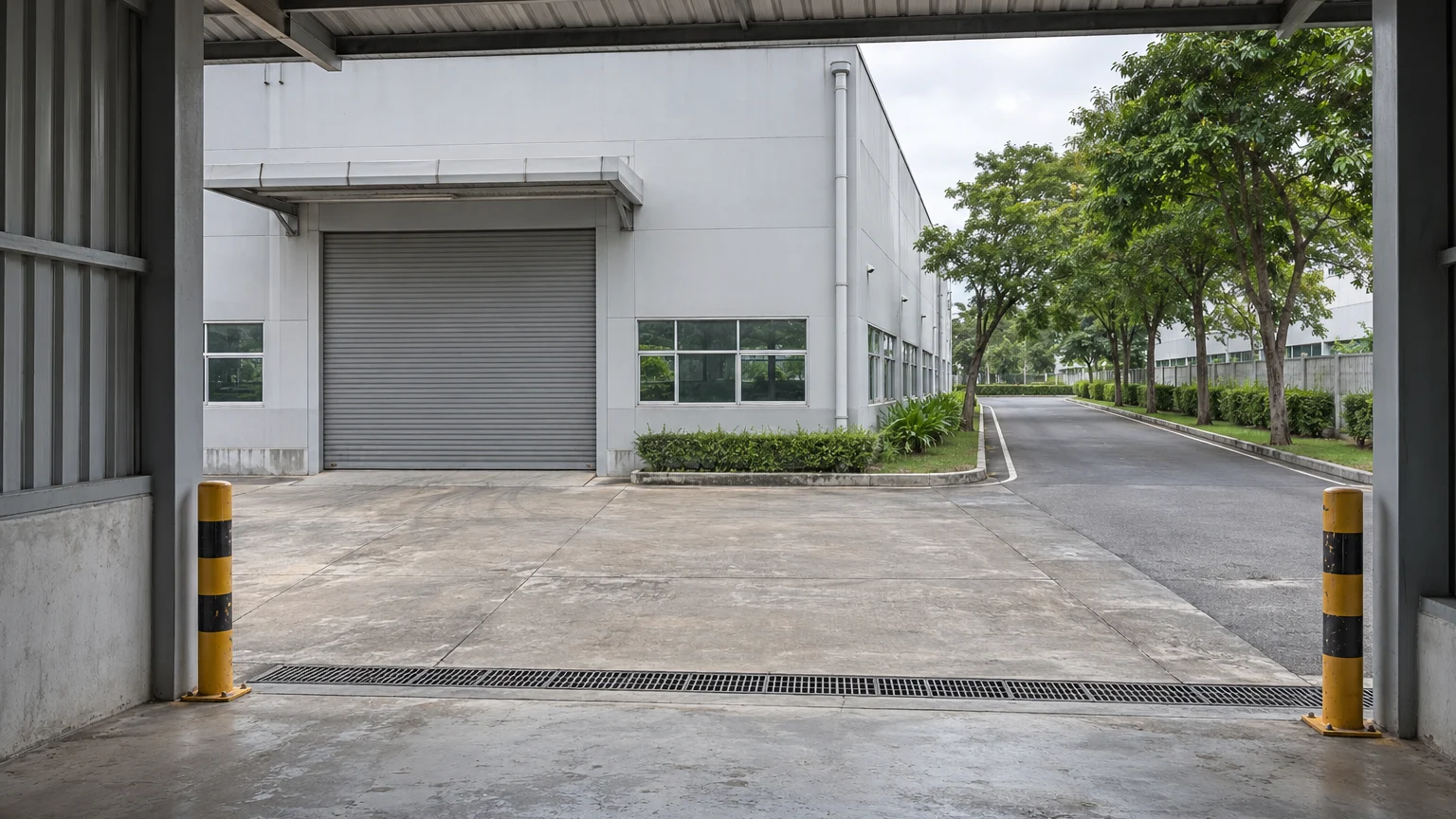
AI-generated editorial image of fictional commercial premises in Thailand. It does not depict a Nestenn listing.
Write down what must happen at the address
Give your adviser an operating brief, not just a floor-area target. A showroom might need weekend customer access and prominent signage. A distributor might need delivery vehicles to turn on site, a specified floor loading and an uninterrupted route to the public road. An office might need cooling outside building hours. Say whether you will store goods, receive visitors, run equipment or alter the premises, and note the date by which you need to open.
Separate requirements that can be priced from ones that can kill the deal. Adding suitable lighting may be manageable. A site that cannot legally accommodate your activity or cannot take the vehicles you rely on may never work for you. Agree on this distinction before paying for detailed surveys or negotiating a lower price.
Confirm who can grant the right you need
Have independent Thai counsel verify the title and relevant registered rights at the competent Land Office. Give them the parcel identifier, site plan and proposed transaction, so the search addresses the space you inspected. Ask about mortgages, registered leases, servitudes and restrictions, and whether a lender release or third-party consent must be delivered at completion. Check the right to use any private road, shared parking area, loading bay or utility route on which the operation depends.
When a company is selling or letting the property, obtain its current registration evidence and check who can sign and what approvals the transaction needs. A Department of Business Development certificate helps identify the entity and its authorised representatives. It does not establish ownership of the building. Where a tenant is offering a sublease, ask counsel to reconcile the sublease with the head lease and verify required consents, expiry and what happens if the head lease ends early.
For a lease, verify exactly what is included, the term, any applicable registration requirement and the parties' ability to register it. Treat a renewal option as a contractual item to review rather than an extra secured term. For an acquisition, ask counsel to confirm eligibility for the proposed ownership structure before committing. The checks depend on the buyer and asset; the fact that a seller holds title does not establish that a particular buyer can acquire it.
Test the intended use against the building file
Start with the applicable planning rules for the parcel. The Department of Public Works and Town and Country Planning offers planning and building-control services through DPT Town Square; Bangkok also has its own planning enquiry channels. Use online maps to screen locations, then ask the competent authority or your specialist to check your activity at that address under the current rules. A district name, zoning colour or draft planning map is not a parcel-specific conclusion.
Compare the available permits and approved plans with the actual layout. An added mezzanine, rear extension, enclosed loading area or new activity could change what must be checked. Ask who will obtain any required approval for alterations, change of use or operation. If environmental assessment may apply, ONEP's Smart EIA Plus can help locate records. A search result, or the absence of one, does not determine the obligations for your proposed operation.
Make the site visit answer operational questions
Walk the delivery route, from the public road to the point where goods will be unloaded. Ask an engineer to check the dimensions, floor condition and capacity against your vehicles and equipment. Observe the site at a time that reflects your working hours. Ask about drainage, past water entry and after-hours access; verify what you can with inspection findings, maintenance records and written operating rules.
Request records for electrical supply, ventilation and fire systems. Confirm with the relevant provider or building manager what capacity is actually available, what an upgrade would require and who pays for it. For alterations, obtain a budget and programme that allow for approvals, lead times, testing and access for contractors. Leave room in the opening schedule for those dependencies instead of assuming works can begin on handover day.
Work through the documents before pricing the risk
| Question | Evidence to request | Decision if unresolved |
|---|---|---|
| Can we occupy the full area we need? | Title or head lease, signed premises plan, access rights and required consents. | Do not rely on an area or right that is not documented. |
| Can this activity operate here? | Parcel planning check, approved building plans and applicable operating or works approvals. | Make the commitment conditional on clear evidence. |
| Can we open on time? | Engineering findings, utility capacity, fit-out scope and realistic completion dates. | Move the opening assumption or reject the site. |
| Will the income or occupancy budget hold? | Executed leases or cost schedule, receipts, arrears, service charges and repair estimates. | Reprice a measurable cost; pause if reliable records are missing. |
Compare the full occupancy cost
If you will occupy the premises, compare the whole commitment: rent or purchase price, deposits, fit-out, charges, utilities, insurance and any end-of-term reinstatement. A refundable deposit ties up cash even if it is not an expense. Ask your accountant which taxes apply to your structure and what cash must be available before opening. A quote that excludes essential works is not comparable with one for a space already equipped for the same activity.
Verify the income you are buying
If you are buying income, tie each rent-roll line to a signed lease and actual payments. Review incentives, side letters, arrears, deposits, break rights, expiries and the cost of space becoming vacant. Verify which amounts transfer at completion and which liabilities remain with the seller. Compare sustainable income with the building's recurring costs and future works, using our net yield and liquidity guide for the investment calculation.
Decide what has to be true before money is at risk
Keep a short issues register. For each gap, record the evidence required, the person who can provide it, the deadline and the consequence if it remains open. Price a repair once the scope is credible. Make missing consent or a critical use approval a condition to be satisfied at the appropriate stage. If the seller or landlord cannot deliver a right the operation depends on, a discount may not solve the problem.
Ask independent counsel to put the agreed conditions, deadlines and deposit treatment into the documents before signing. Establish what happens if evidence arrives late or a condition fails. Keep the final approvals, measured plans and handover records together; the team running the building will need the same information the acquisition team used.
Send Nestenn your operating brief
Start with our commercial property guide or browse the current property catalogue. If you have a candidate address or a search underway, send Nestenn your commercial property brief with the activity, target location, budget, required area, opening date and requirements that cannot change. We can help frame the shortlist and compare the evidence you receive, alongside your independent legal and technical advisers.
Frequently asked questions
What should I check first when leasing commercial premises in Thailand?
Define the activity and confirm the space, access and permitted use. Ask who can grant the lease, what consents or registration apply, and which party must secure approvals or carry out works.
Does a building permit prove my business can operate there?
No. Compare the approved building and its current configuration, then verify planning, change-of-use and any operating requirements for your specific activity.
How can I verify rent on a tenanted property?
Reconcile the rent roll with signed leases, amendments and actual receipts. Check arrears, incentives, deposits, expiries and break clauses before modelling net income.
Should I pay a deposit before all checks are finished?
Ask your lawyer to review the proposed deposit and refund terms before signing or paying. Document the evidence and consents still needed and what happens if a condition fails.
What information should I send Nestenn?
Share the activity, target location, area, budget, opening date and non-negotiable operating needs. If you have a site, include its address and the right being offered.
Sources
- DPT Town Square: planning and building-control services, Department of Public Works and Town & Country Planning
- Department of City Planning and Urban Development: parcel planning enquiries, Bangkok Metropolitan Administration
- Business Registration Certificate, English version, Department of Business Development
- Smart EIA Plus environmental assessment database, Office of Natural Resources and Environmental Policy and Planning
- Real estate transactions in Thailand: due diligence, DLA Piper RealWorld Law, July 19, 2023 (last modified on guide)
- Land registration evidence: inspection and copies at the Land Office, Department of Lands
Loading content...